PRODUCT & EXPERIENCE STRATEGY
Make the
evidence visible.
I turn research, audience behavior, content, and emerging technology into clear systems that help people understand, decide, and act.
VIEW THE EVIDENCE-STRATEGY CASE STUDY ↓
DISCOVERTrending
now
UNDERSTANDEvidence
model
LEARNAdaptive
system
FEATURED RETROSPECTIVE CASE STUDY
From fragmented content
to connected intelligence.
One strategic idea, developed across three contexts: use a shared semantic layer to make information comparable, connected, and useful to the person in front of it. Across all three systems, the strategic question was the same: what evidence does someone need now to understand the options and choose confidently?
TECHCRUNCH
Content → contextNormalize first- and third-party coverage so readers can investigate the full story.AARP
Context → relevanceConnect a shared content taxonomy to progressively more precise audience segments.CONVERSIONENGINE
Model → productMake connected content and audience intelligence available beyond the enterprise.01
SHIPPED FOUNDATION
TechCrunch
When I took over the TechCrunch app, the average session lasted about nine seconds. That was not a broken product: busy technology professionals were scanning headlines between meetings. We preserved that fast scan, then made the app a more useful research utility. By mapping TechCrunch, AOL, and third-party journalism to a common taxonomy—and resolving the people, companies, products, and events inside each story—we could surface genuinely connected perspectives, meaningful story momentum, video, and deeper context.
- 120% increase in in-app time
- 20% increase in video views
- 2013 Webby Award
WHAT I SAWNine-second sessions reflected intentional headline checks between meetings, but limited advertising opportunity.
WHAT I DIDKept fast headline checking easy while adding an optional research path through connected journalism and context.
WHAT CHANGEDIn-app time increased 120%, and the app launched with a paid sponsor.
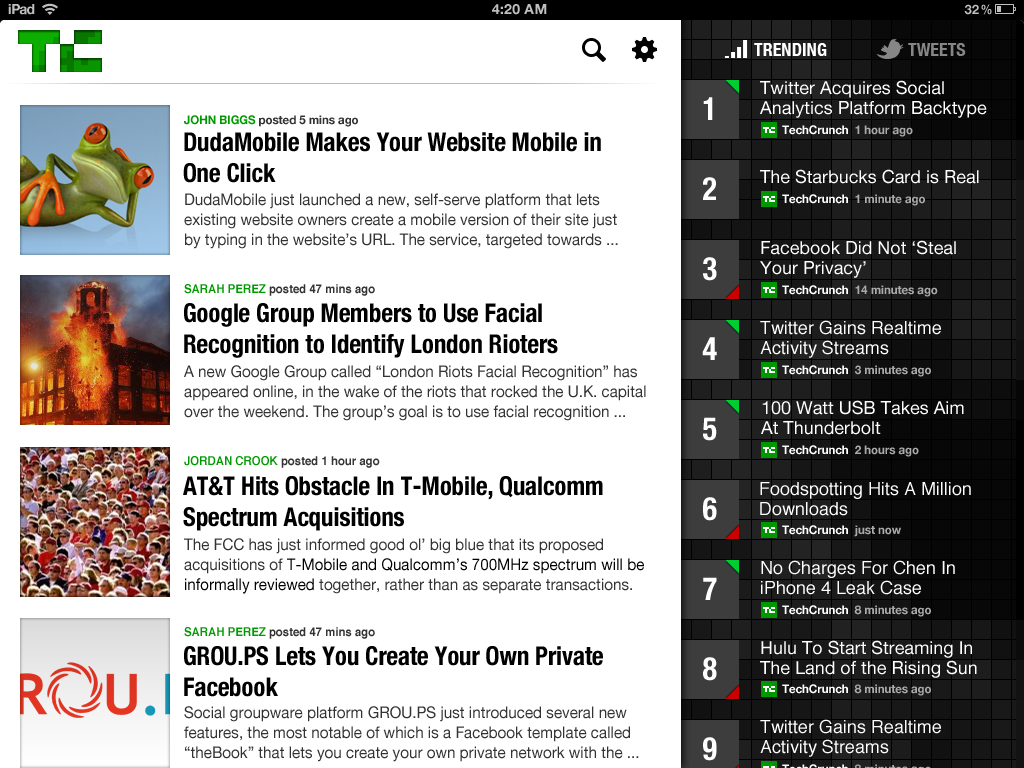
AOL / TechCrunch — David led product strategy and cross-functional delivery for this shipped work.
02
APPLIED STRATEGY & PROTOTYPE
AARP
At AARP, I brought that content-intelligence model into personalization. An enterprise taxonomy, developed by a parallel workstream, made content across channels comparable. I designed a progressive segmentation model so both authenticated and unauthenticated visitors could receive increasingly relevant experiences: begin with broad contextual segments, establish device-level continuity where appropriate, and refine the model as permitted behavioral, preference, and other signals accumulated. That made it possible to form increasingly precise, revisable hypotheses about what content might resonate with a given segment, then improve the next experience as more context emerged.
- Progressive audience segmentation
- Enterprise content taxonomy
- Strategy and prototype work
WHAT I SAWFirst-year renewal lagged industry standards, while authenticated and unauthenticated visits received the same generic experience.
WHAT I DIDDesigned progressive segmentation so every visitor could receive increasingly relevant experiences.
WHAT IT ENABLEDA strategy and prototype for a more relevant first-year journey, designed to reduce bounce and improve renewal.
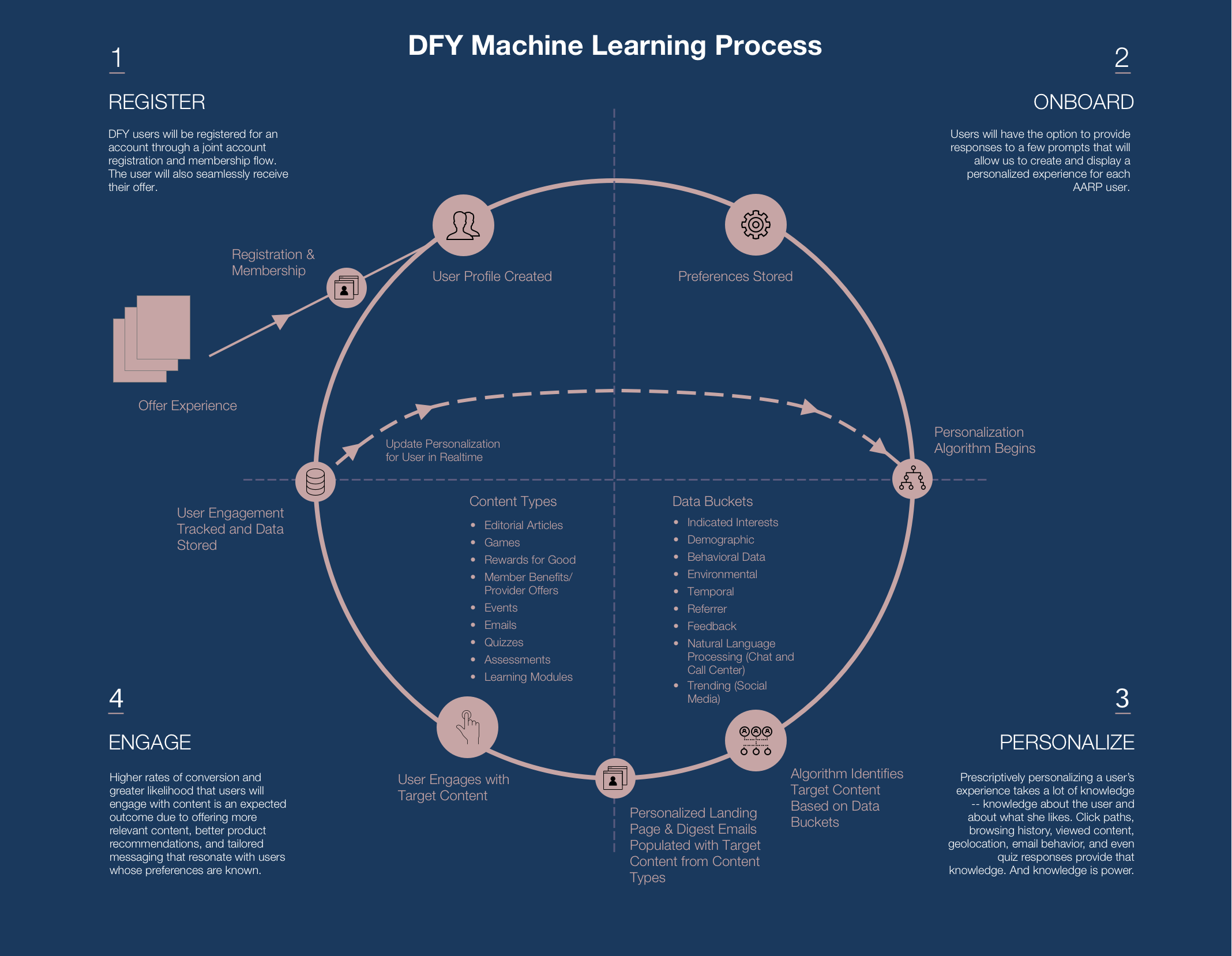
AARP — David led the personalization strategy and Figma prototype; enterprise taxonomy was a parallel workstream.
GO DEEPER: DESIGNING ENGAGEMENT GATES
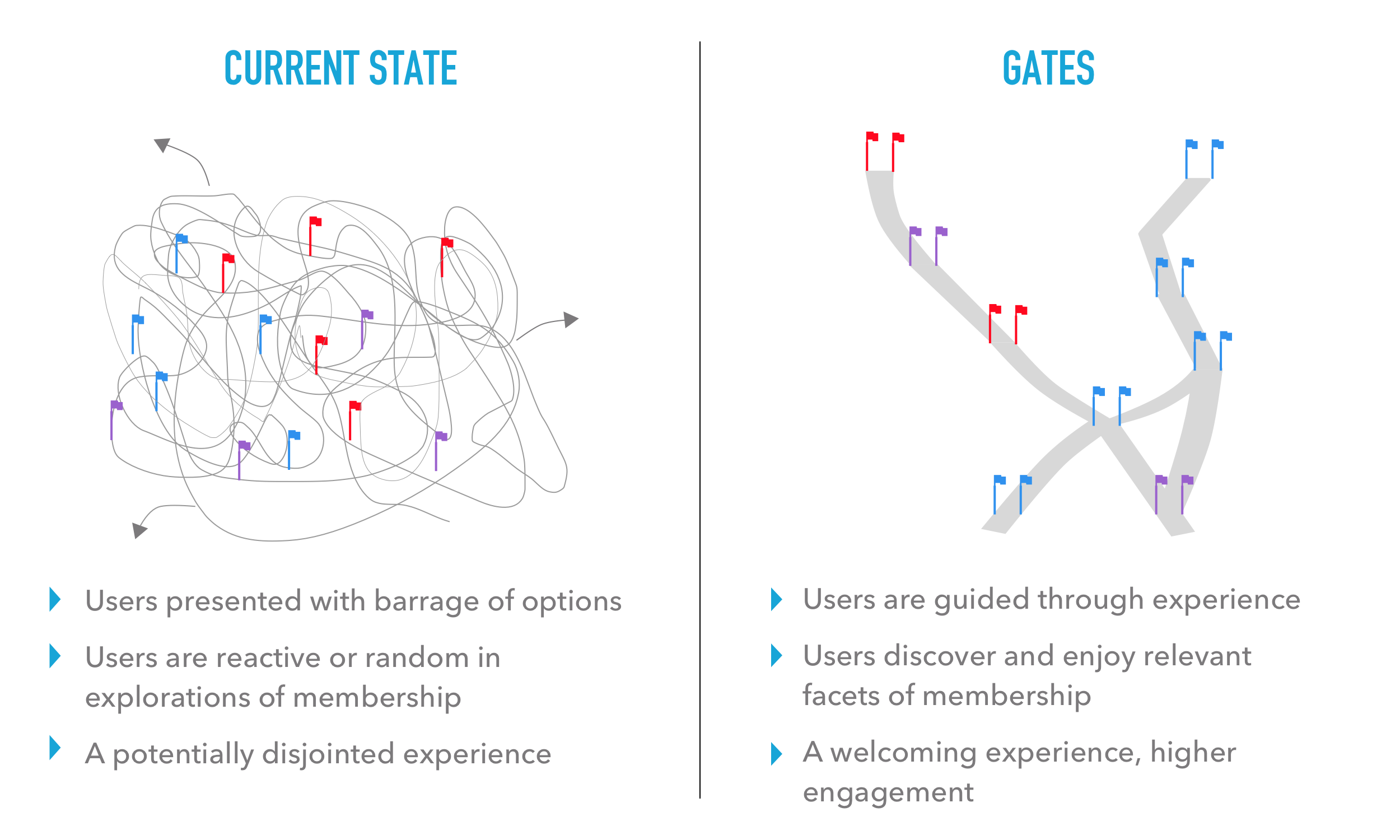
ENGAGEMENT GATES
Turn relevance into forward motion.
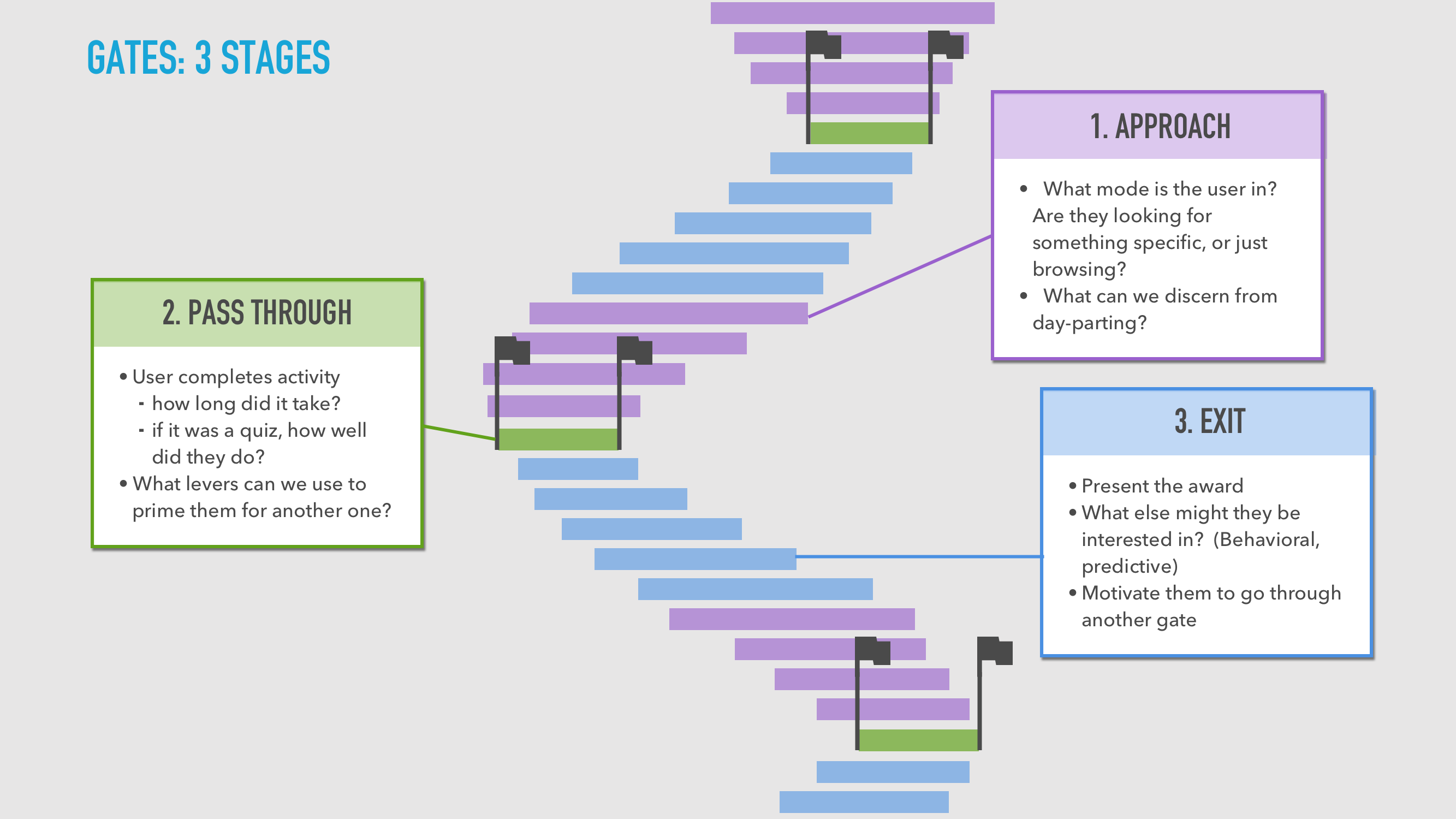
Gates were designed to create meaningful engagement: understand a visitor’s context on approach, support a relevant action at the gate, then use the result to orient the next step. The hypothesis was that the more meaningful engagements a person has with a brand, the more loyal they will be to that brand.
03
INDEPENDENT SYNTHESIS
ConversionEngine
ConversionEngine was David’s independent productization of a core idea he had developed and applied across his work: connected content and progressively refined audience intelligence should not be limited to organizations with enterprise-scale resources. The system would begin with the broadest segment supported by the data available, then tighten its hypotheses over time as behavioral, temporal, referral, feedback, and other available signals accumulated—using those segments to improve the next experience.
- Progressive audience segmentation
- Templatized, customizable model
- Independent prototype
WHAT I SAWBuilding personalized journeys and content—powered by connected content, progressive segmentation, and continuous learning—was too complex and expensive for most brands.
WHAT I DIDIndependently designed a configurable model that starts with a brand’s available data, then progressively refines dynamic audience segments and content associations.
WHAT IT ENABLEDA commercially viable concept for making data-driven personalized journeys and content accessible beyond the enterprise.
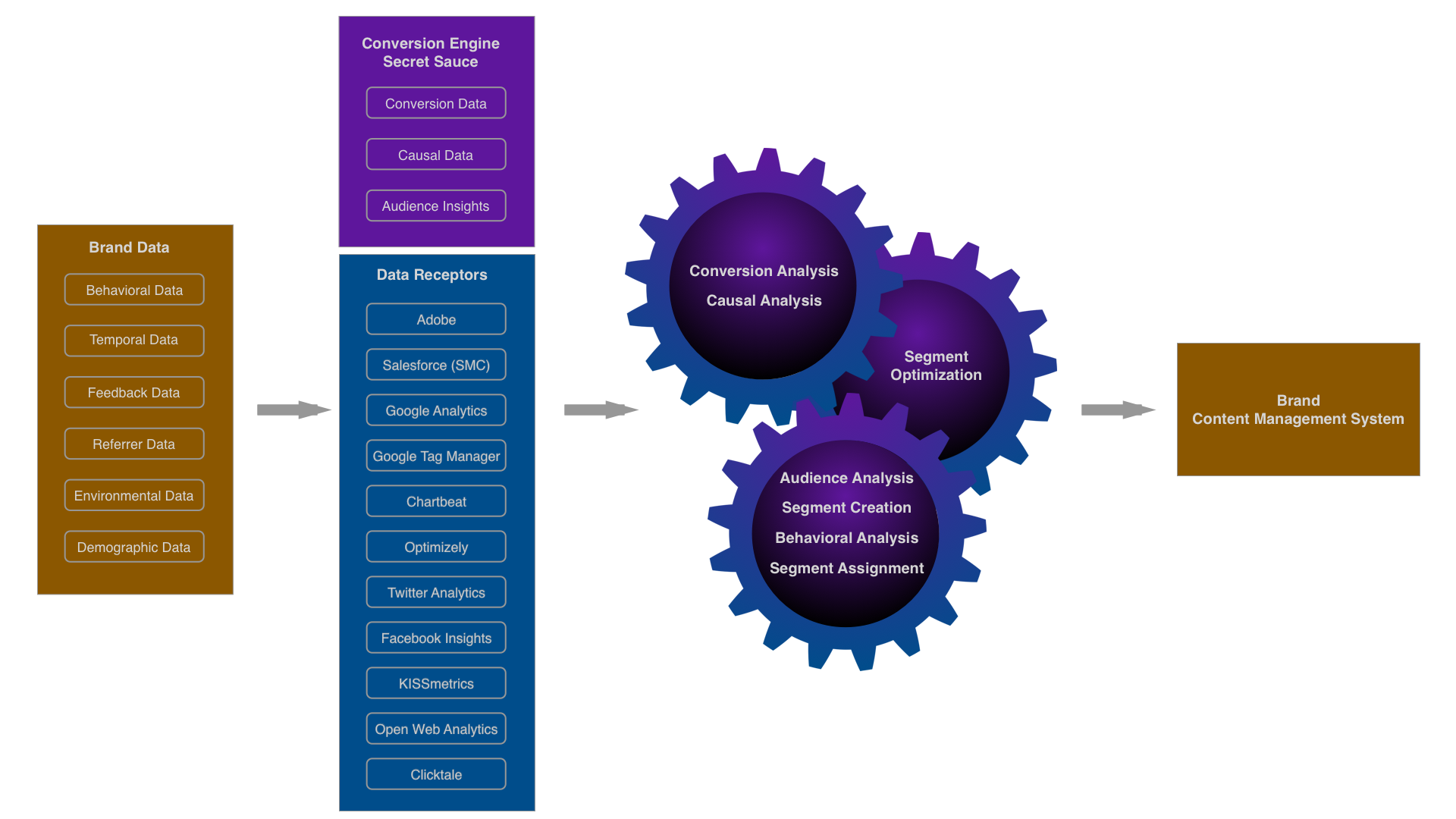
ConversionEngine — authored by David. Framework and prototype, not a production deployment.
A CLEAR TRUTH BOUNDARY
This retrospective connects contemporaneous work while distinguishing shipped product, client strategy and prototype work, and independent framework design.
ABOUT
Strategy for complex
digital ecosystems.
For more than two decades, I have worked across media, consumer products, public services, and AI-enabled experiences—connecting research, product, design, content, operations, and technology.